- Project dates
- 5 year
- People at risk
- 300,000
- Pollution source
- Lead smelting/Pb, Cd, As,
- Implementers
- EHPMI, Human Health Institute
- Budget
- $800,000
Problem Description
Shymkent is the biggest city in South Kazakhstan with population 1,1 million people. During the Soviet time Chimkent was developed as a big industrial center, particularly during the WWII when the government had to move here 17 factories from central Russia.
The lead and zinc refining and smelting center was built in 1930s. It used ore from South and East of Kazakhstan and produced about 70% of all lead in the Soviet Union. The production of lead continued at full scale through 2008 when it significantly decreased for economic reasons. Over 80 years of operation, the smelter released large quantities of lead dust, contaminating vast swaths of the city, including residential and commercial areas surrounding the smelter.
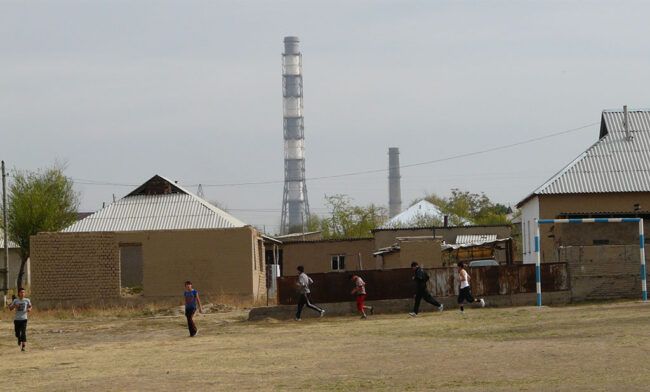
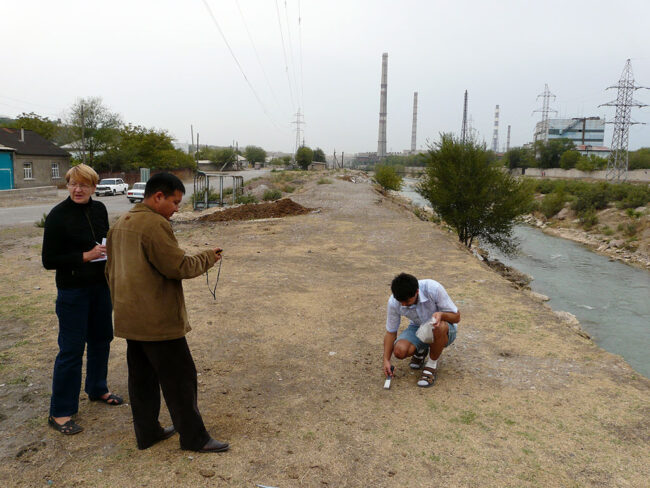
Lead poses serious health risk to humans if ingested or inhaled. Investigations conducted between 1990 and 2012, including those by current EHPMI members as part of Blacksmith Institute assessments, found that polluted soil poses a significant hazard to the local population, especially for children. EHPMI estimates that about 20% of the residential area of the city is contaminated with lead.
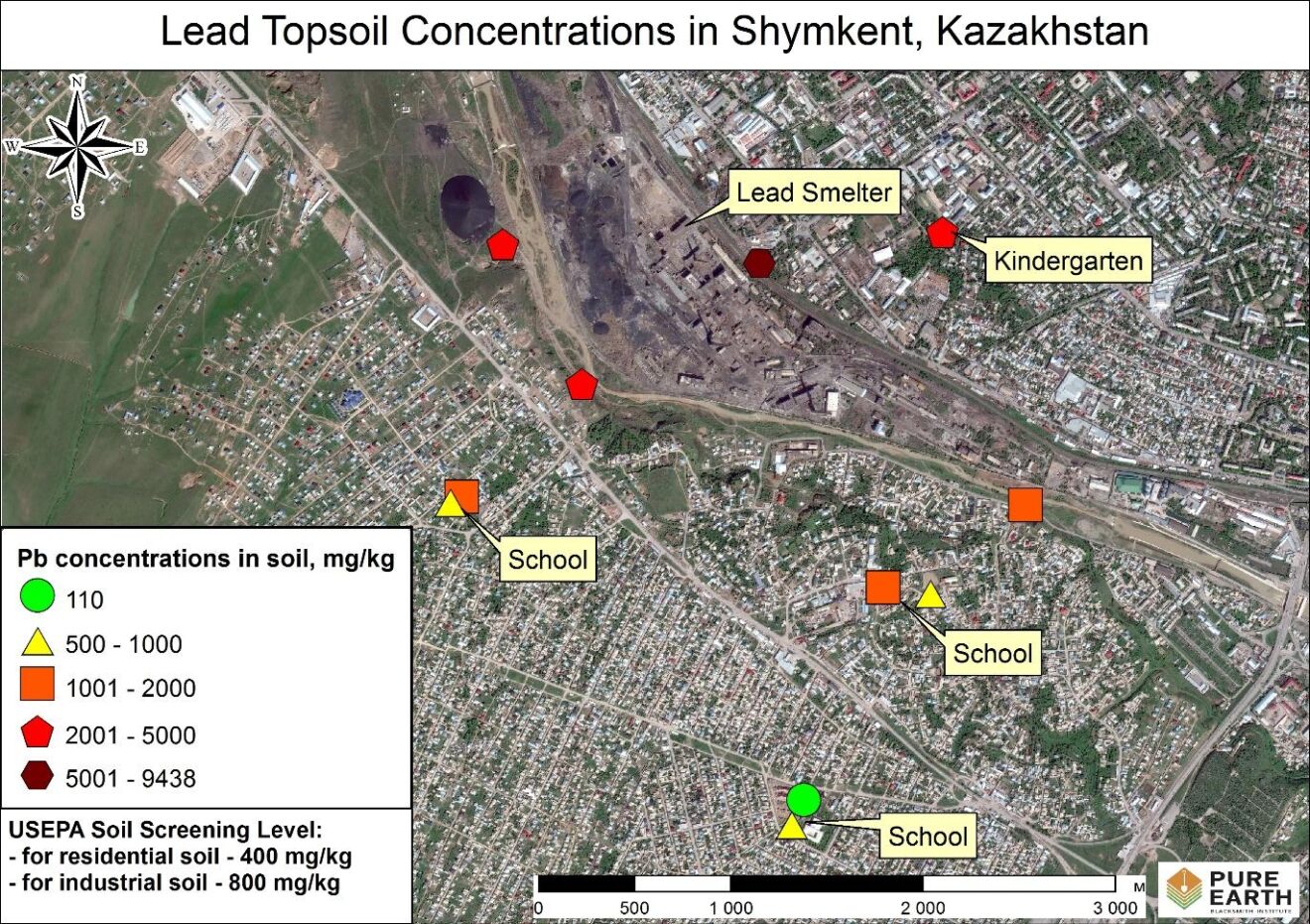
A study performed by the Colorado-based International Task Force for Children’s Environmental Health presented at the American Industrial Hygiene Association conference in 2011 found that 95% of the children tested in the city had blood levels above 10 micrograms of lead per deciliter of blood (µg/dl), which was the recommended maximum value at that time. Now it is 3.5 µg/dl. The average was 20 µg/dl. Within 1 kilometer of the plant, the average was 32 µg/dl, while the highest score for a child was 103 µg/dl.
Proposed Solutions/ Project Objectives:
- Detailed environmental assessment contaminated areas
- Planning and implementing cleanup of priority locations such as kindergartens and schools
- Medical Monitoring
- Public Awareness